
Climate Finance
Finance has been the most contentious topic of negotiations at the UNFCCC. The treaty establishing the UNFCCC obligates rich countries to assist developing countries with climate action. The Paris Agreement similarly reminds rich countries of their commitment.
But climate finance has not been flowing. Various work programs of the UNFCCC have stalled due to the lack of finance. Developing countries consider the lack of finance as a betrayal of the compromises made to launch the Paris Agreement.
Meanwhile, countries linked by their interest in buying or selling offsets have constantly steered the negotiations toward carbon-market creation. Within Paris Agreement Article 6, Parties provide ample negotiating time to government-to-government trade in ‘mitigation obligations’ (Article 6.2), as well as standing up the rules to govern global carbon markets.
Despite the failure of the rich countries to honor their climate finance commitments, and despite the capture of ‘international cooperation on mitigation’ discussions by the carbon marketeers, there are a few bright spots in the climate finance landscape.
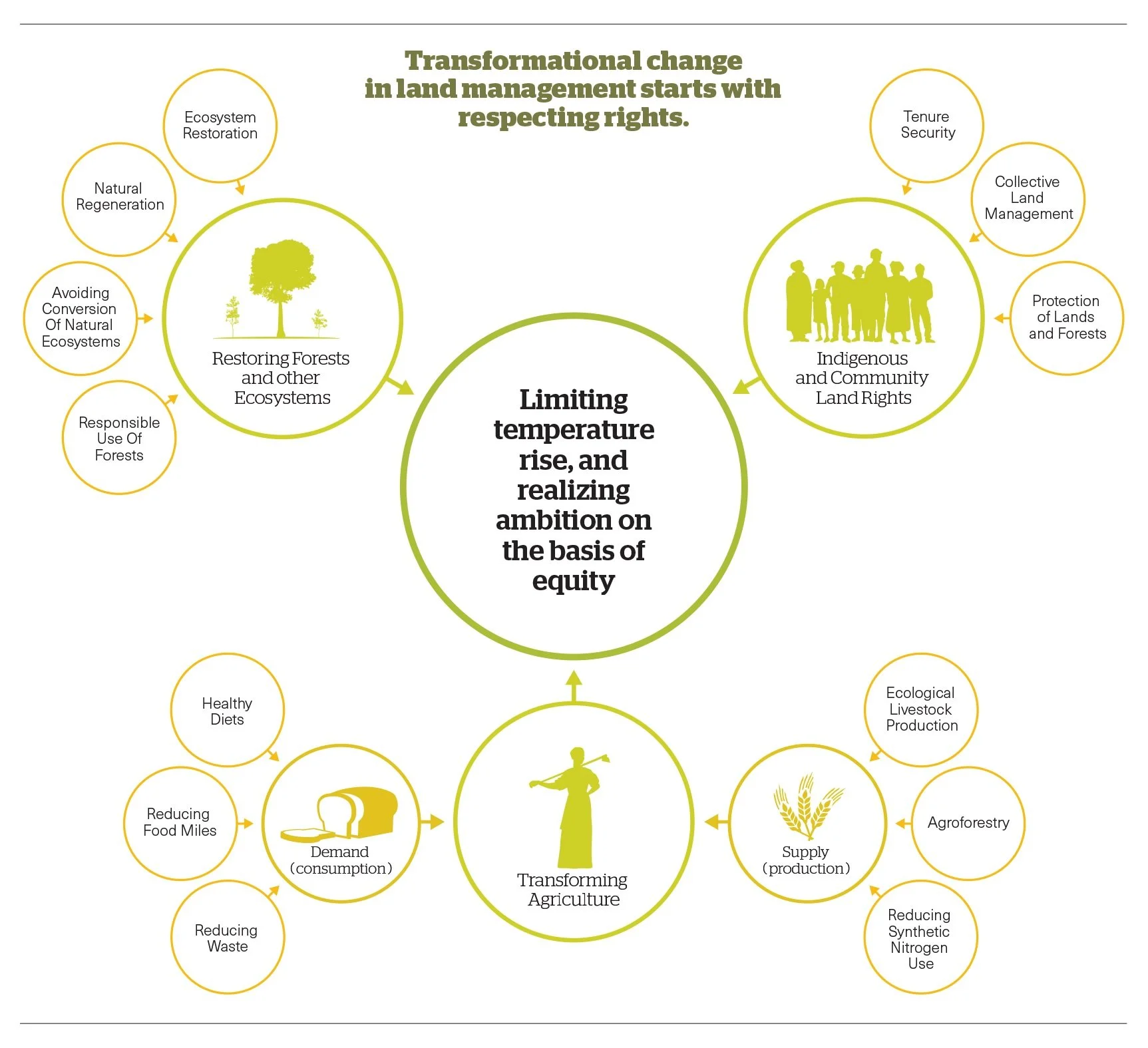
The first of these is the launch of the Article 6.8 platform for ‘non-market activities’. This platform can and should provide the place for support of: indigenous land tenure linked to sustainable resource management; joint biodiversity-climate actions, and finally as the place where ‘Mother Earth-centric actions’ will be considered.
From the UNFCCC:
Article 9 of the Paris Agreement stipulates that developed country Parties shall provide financial resources to assist developing country Parties with respect to both mitigation and adaptation in continuation of their existing obligations under the Convention. Other Parties are encouraged to provide or continue to provide such support voluntarily.

The second area of innovation – responding to both the shortcomings of REDD+, and the mania around carbon market creation – is Brazil’s TFFF proposal. TFFF hopes to mobilize investment capital, in the form of a green bond, to reward tropical forest countries for keeping their forests standing. This isn’t payment for carbon; it is an anti-deforestation approach. Some TFFF details are still being worked out ahead of COP30. CLARA and others have commented on the TFFF here.
Finally, ‘Nature Based Solutions’. CLARA was enthusiastic about the attention that ‘NBS’ would bring to mitigation and adaptation actions in the land sector, because action in the land sector remains so badly under-financed. But CLARA members were also wary that the term ‘nature based solutions’ would be appropriated by carbon marketeers, plantation developers, and biomass energy proponents.
CLARA has pushed back on this interpretation – noting the sharp differences that exist between nature-based approaches focused on maintaining or restoring ecological integrity, and market-based approaches intended primarily to monetize natural resources. Read more here.
CLARA members continue to push for the provision of climate finance, as mandated by the UNFCCC treaty and reaffirmed in the Paris Agreement. Finance not tied to carbon markets, but instead finance provided to help countries implement the climate actions defined in each Nationally Determined Contribution (NDC).